
As an Amazon Associate I earn from qualifying purchases.
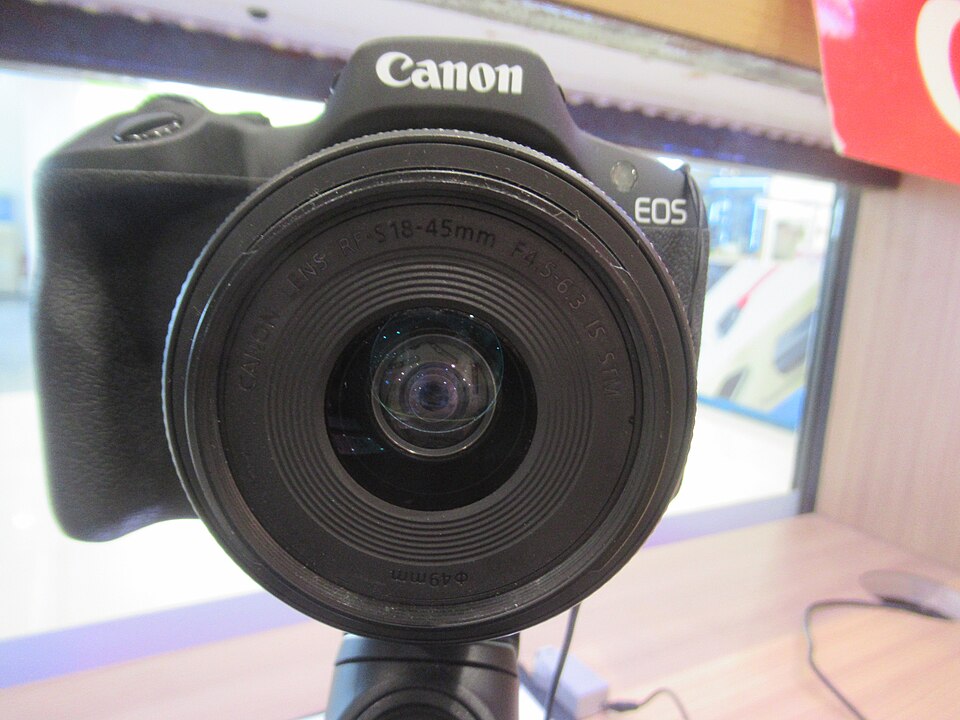
The original Canon EOS R50 is a small interchangeable-lens APS-C camera for people who want more control than a phone or fixed-lens compact. It is not the later EOS R50 V. This research-based buying guide explains which features matter, what a first kit really costs, and when another camera makes more sense.
Editorial research guide. An exact-product Amazon affiliate purchase link has not been verified and is not included. No hands-on testing or live price claim is made.
Who the EOS R50 suits
The R50 is a sensible candidate for travel, family photography, portraits, beginners learning exposure, and creators who want a viewfinder plus a fully articulating display. Its relatively approachable controls and automated subject detection reduce the learning curve, but lenses and lighting still matter more than a marketing megapixel count. Someone primarily recording lengthy studio videos may prefer a video-focused body.
Sensor, autofocus and image quality
Canon specifies an approximately 24.2-megapixel APS-C CMOS sensor and DIGIC X processor. Its Dual Pixel CMOS AF II system supports subject tracking, a meaningful benefit when photographing moving people or pets. APS-C is larger than many smartphone sensors, but low-light results depend heavily on lens aperture, shutter speed and stabilization. No personal image-quality testing is claimed here.
Video capability and limitations
The original EOS R50 supports oversampled 4K recording up to 30p and Full HD high-frame-rate options. Its vari-angle touchscreen is useful for self-recording and shooting at unusual angles. It lacks the same body design and feature priorities as the EOS R50 V. Long recordings can be limited by temperature, power and storage, so buyers should verify their intended recording conditions.
Lens compatibility and total cost
The Canon RF mount accepts compatible RF and RF-S lenses. Canon EF and EF-S DSLR lenses can be used with the appropriate EF-EOS R adapter; EF-M lenses are not supported. A basic kit zoom is portable but may be less useful for dim indoor scenes or pronounced background blur than a faster prime lens. Budget for a memory card, spare battery, bag and possibly a microphone rather than comparing body-only prices.
Ergonomics and tradeoffs
The R50 has a built-in electronic viewfinder and a 3-inch vari-angle touchscreen, useful advantages over some compact creator-oriented cameras. Its small grip and limited direct controls may feel cramped to users with large hands or who frequently adjust settings manually. There is no in-body sensor-shift image stabilization; compatible lens stabilization or electronic video stabilization has different tradeoffs.
R50 versus alternatives
Compare the EOS R50 with the more video-focused R50 V, the higher-control Canon R10 and competing APS-C systems from Sony and Fujifilm. If you own EF lenses, adapter cost and autofocus compatibility matter. If you want one camera for travel and family photos, the R50’s viewfinder and simplicity may be more useful than advanced video codecs.
Buying checklist and verdict
Confirm the precise EOS R50 model, included lens and mount, shutter and sensor condition on used units, battery, charger, autofocus, card slot, screen hinge and return policy. A lens-inclusive kit can be a more realistic comparison than a body-only listing. The R50 is appealing for photography-first beginners who accept its limited physical controls and lack of IBIS. Read the Canon EOS R50 official specifications and our mirrorless camera overview.