
As an Amazon Associate I earn from qualifying purchases. No Amazon affiliate purchase link has been added to this guide yet.
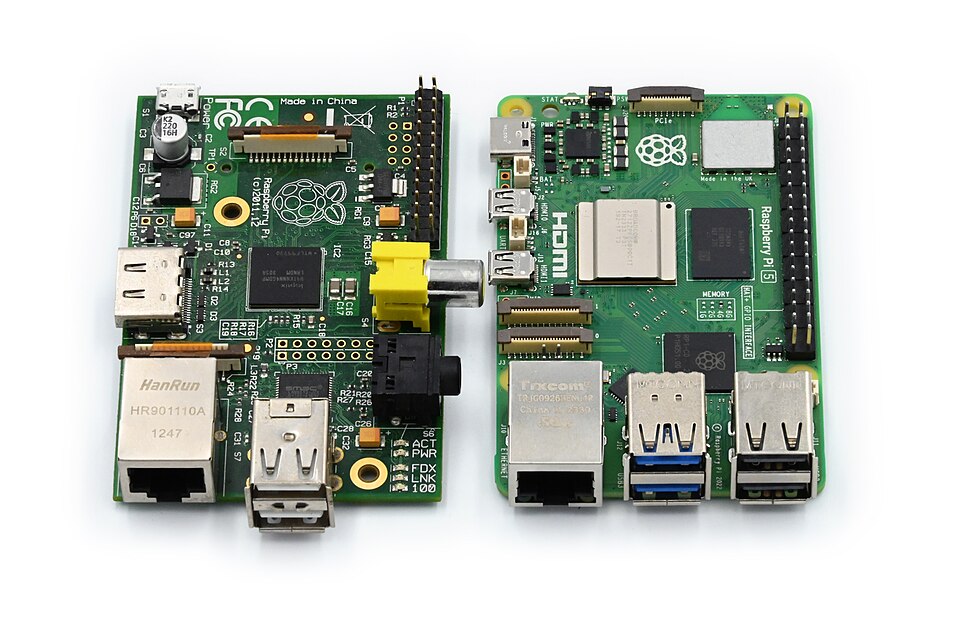
The Raspberry Pi 5 is a compact, versatile computer for people who like to build rather than simply unbox. Its strengths are the ecosystem, GPIO connectivity, and an unusually flexible set of interfaces for a single-board computer. Its limitations—power supplies, storage choices, cooling, software expectations and extra accessory costs—are just as important. Here is how to decide whether it suits your project.
Who is the Raspberry Pi 5 for?
The Pi 5 is a strong candidate for programming education, hobby electronics, home automation prototypes, small self-hosted services, and projects that need direct access to GPIO pins. It can also run a desktop environment, but that does not necessarily make it a cost-effective replacement for a preconfigured mini PC. Buyers should choose it for its particular interfaces and community, not just because the board looks inexpensive.
Processor and graphical capabilities
Raspberry Pi lists a Broadcom BCM2712 SoC with a 2.4GHz quad-core 64-bit Arm Cortex-A76 CPU and VideoCore VII graphics. The graphics subsystem supports OpenGL ES 3.1 and Vulkan 1.2. This is a meaningful step for many Raspberry Pi workloads, but graphics APIs and processor specifications do not establish a universal frame rate or desktop-performance benchmark. Actual performance depends on thermal conditions and software optimization.
Memory configurations and project requirements
The Pi 5 family has been offered in multiple RAM configurations. Choose memory based on your intended operating system and services rather than assuming the largest option is always necessary. A lightweight sensor controller needs far less memory than a multi-service home server or a heavily tabbed browser. Verify that the retailer is advertising a genuine Raspberry Pi 5 and the exact RAM configuration.
Ports and expansion
The board includes two USB 3.0 ports, two USB 2.0 ports, Gigabit Ethernet, dual-band Wi-Fi, Bluetooth, two micro-HDMI outputs supporting up to dual 4Kp60, and a standard 40-pin GPIO header. The PCIe 2.0 x1 interface can be used with suitable adapter hardware. These features make it flexible, but expansions can introduce compatibility and space considerations. Check what adapters, cables and enclosures your project actually requires.
Plan power correctly
The Raspberry Pi 5 is specified for a 5V/5A USB-C supply with USB Power Delivery support. Not every spare USB-C charger can provide an appropriate power profile. Underpowered setups can create instability, especially with storage drives or other peripherals. A suitable power adapter should be part of the project budget.
Cooling and cases
Board-only photographs can obscure the practical need for a case or protective mounting. Workloads that sustain high CPU activity may benefit from active cooling. Choose a case that provides adequate airflow while still exposing the connectors you need. Before ordering a case from a third party, confirm it is specifically compatible with Raspberry Pi 5 rather than an older Raspberry Pi 4 layout.
Storage and operating systems
The microSD card slot is convenient for setup and experimentation, but some projects need more robust storage for frequent writes or larger datasets. A compatible PCIe storage adapter can make sense for performance-oriented builds, though it adds components and requires planning. Raspberry Pi OS is a natural starting point; availability of other operating systems and drivers depends on your application.
Raspberry Pi 5 versus a mini PC
A small refurbished office PC or modern mini PC might provide better general desktop performance, more straightforward SSD storage and a ready-made enclosure. The Pi 5 generally makes more sense when you value the GPIO header, low-level tinkering, educational materials, and custom embedded integration. Total system cost should include the board, case, cooling, power, cables and storage.
What to verify before purchase
Check RAM size, whether the listing is board-only or a kit, the power supply rating, included microSD/SSD storage, case compatibility and warranty. If you are building a server, consider power reliability, backups and how it will be maintained. There are no live inventory or retailer price assertions in this guide.
Verdict
The Raspberry Pi 5 remains compelling as a flexible maker and programming platform, not an automatic bargain desktop. Its value comes from selecting it for projects that benefit from its physical interfaces and software ecosystem.