
As an Amazon Associate I earn from qualifying purchases. This independently researched editorial guide does not currently contain a verified Amazon affiliate purchase link.
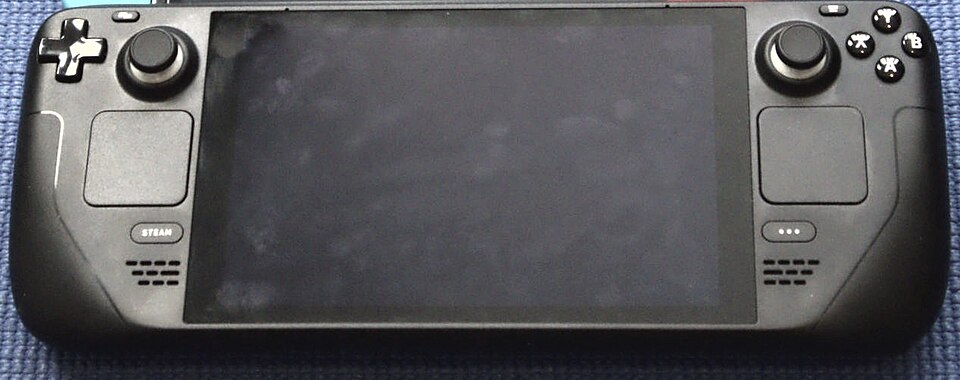
The original Steam Deck LCD remains an interesting used handheld PC for people who want access to a substantial PC game library without carrying a laptop. But its LCD screen, battery life and wireless hardware differ from the later OLED model. This guide focuses on the original LCD family shown in the licensed product photograph, not the OLED version already covered separately on BuyTheGadget.
Hardware: what makes the LCD model different?
Valve specifies a 7 nm AMD APU with four Zen 2 CPU cores and eight RDNA 2 graphics compute units, plus 16 GB of LPDDR5 RAM. The LCD screen is a 7-inch optically bonded IPS panel with 1280 × 800 resolution, 60 Hz refresh rate and 400-nit typical brightness. It is a touchscreen, and the handheld integrates conventional gamepad controls, trackpads, gyro input and rear grip buttons. These are manufacturer specifications, not independent benchmark results.
Storage variants and used-market traps
The original LCD family was offered in 64 GB, 256 GB and 512 GB configurations, with different storage characteristics and some variations in display glass. Used sellers may have swapped SSDs or modified the unit. Ask for the precise storage capacity and condition rather than assuming that the exterior proves the configuration. All LCD variants include a microSD slot, but card speed, available space and game sizes still affect loading and convenience.
The PC-game advantage
SteamOS gives the handheld a console-like experience for many compatible PC titles, and its desktop mode adds flexibility for users comfortable with Linux. Steam’s compatibility ratings can help buyers assess whether a game supports controls, text readability and performance expectations. However, not every PC game works perfectly: some anti-cheat systems, launchers and peripheral requirements can prevent smooth handheld play.
Battery life and charging
Valve lists a 40 Wh battery and an estimated two to eight hours of play depending on workload, with a 45 W USB-C power supply. Graphically intensive games can drain the battery much faster than lightweight or older titles. On a used unit, battery health and charging-port condition matter more than the original marketing range. Check the included charger and avoid treating a single seller screenshot as a comprehensive battery test.
Screen, wireless and ergonomics
The LCD model has Wi-Fi 5-class dual-band wireless and Bluetooth 5.0. Its approximately 669 g weight may feel substantial during long sessions. The touchpads, full-size sticks and customizable rear buttons help with games that were originally designed around mouse and keyboard input. Buyers should check stick drift, shoulder buttons, trackpad response, screen damage and fan noise during a real demonstration.
LCD versus Steam Deck OLED
The OLED successor has a larger 7.4-inch HDR OLED screen, up to 90 Hz, Wi-Fi 6E and a larger 50 Wh battery according to Valve. That does not make every game automatically faster, but the display and battery changes are compelling for frequent portable play. A used LCD unit makes most sense when its price is meaningfully lower and its condition is demonstrably good. See the dedicated Steam Deck OLED review for that separate model.
Steam Deck versus consoles and gaming laptops
A handheld PC offers portability and a PC software ecosystem, but it also requires more tolerance for updates, game settings and occasional compatibility work than a traditional console. A laptop may offer a bigger display and keyboard for productivity, while a Nintendo Switch Lite is simpler for its own game library. The correct purchase depends on the games you already own, how often you play away from an outlet and whether you enjoy adjusting settings.
Pros, cons and buying checklist
Advantages include a portable PC gaming library, integrated controller inputs, expandable microSD storage and a large community of setup advice. Drawbacks include older LCD hardware, variable battery endurance, weight, occasional compatibility friction and secondhand wear. Inspect battery health, SSD capacity, account reset, controls, screen, charging, thermals, case and return rights. No current price, Amazon availability or hands-on testing claim is made.
Official documentation and final verdict
Valve’s Steam Deck LCD technical specifications and Steam Deck LCD versus OLED specifications are the manufacturer references. For someone with compatible Steam games and a verified healthy used device, the LCD model can be a sensible lower-cost entry point. For heavy portable use, compare the OLED battery and display before deciding.